

For millions of fans, Real Madrid Football Club is the most recognisable face of the world’s most popular sport. Since its foundation in the early 20th century, the Madrid-based club has transcended the boundaries of football to become a global institution, a model of sports management and a historical benchmark for success. However, despite its fame and economic power, many people are still unaware of one essential detail: who really owns Real Madrid?
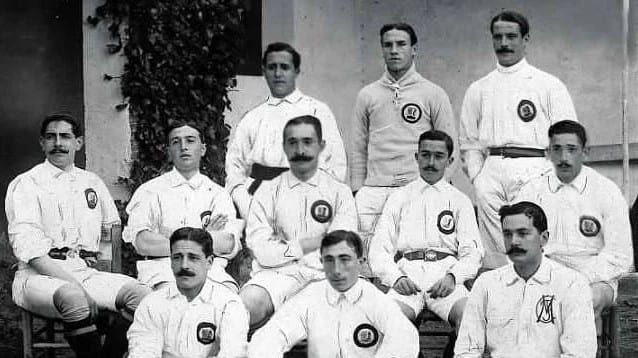
The origins of a century-old institution
The club was officially founded on 6 March 1902, when a group of enthusiasts led by Julián Palacios and brothers Juan and Carlos Padrós formed the Madrid Foot-Ball Club, which would later be granted the title of ‘Real’ by King Alfonso XIII in 1920. From its early years, the team was characterised by its competitive spirit and pioneering spirit, being one of the founders of the current Spanish League in 1928.
Its white colour, which earned it the nicknames ‘merengues’ and ‘blancos’, and its continuous successes in both national and international competitions, consolidated its identity. Over the decades, Real Madrid became synonymous with greatness, achieving an unprecedented record: 36 La Liga titles, 15 European Cups/Champions League titles, and more than a hundred official titles, making it the most successful club on the planet.
The legal change that transformed Spanish football
To understand who the real owner of Real Madrid is, we need to go back to the 1990 Sports Law, a piece of legislation that profoundly reformed the structure of professional football in Spain. The new legislation required clubs to become public limited sports companies (Sociedades Anónimas Deportivas, or SADs), with the aim of attracting private capital and stabilising the financial management of professional sport.
However, four clubs — Real Madrid, FC Barcelona, Athletic Club de Bilbao and CA Osasuna — were exempt from this obligation. The reason: their healthy financial situation at the time and their original legal status as non-profit sports associations.
Thus, while the rest of the LaLiga teams became public limited companies controlled by private shareholders, Real Madrid retained its traditional model of a members’ club.
A club that belongs to its members
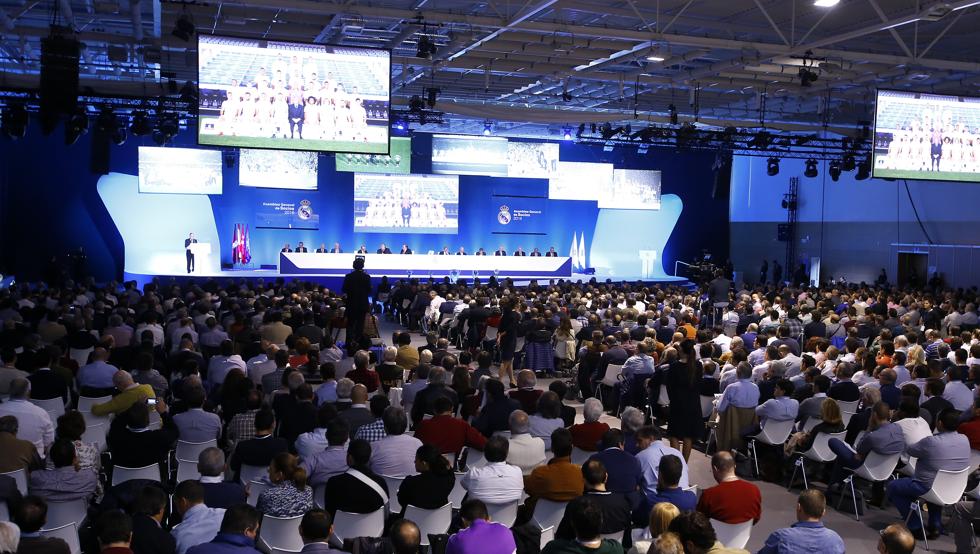
Currently, Real Madrid continues to be collectively owned by its members, who are the true owners of the organisation. According to the most recent data, the club has nearly 100,000 active members, in addition to more than 2,400 official supporters’ clubs around the world.
These members exercise their right to vote at meetings and democratically elect the club president, who acts as representative and manager, but not as owner. The president and his board of directors manage the club on behalf of all members, and their decisions are subject to institutional approval.
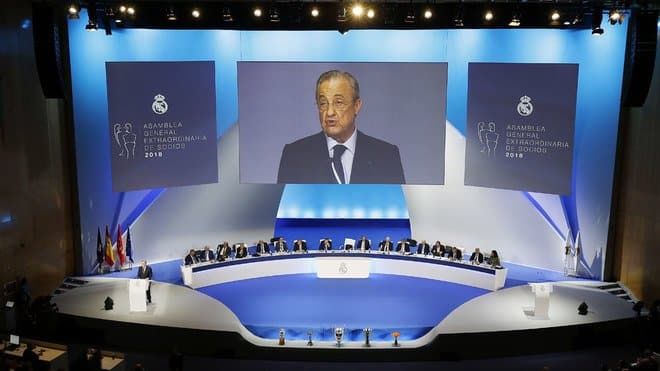
Thus, Florentino Pérez, current president of Real Madrid since 2000 (with a brief interval between 2006 and 2009), is not the owner of the club, but its main representative and head of its management. His role is similar to that of a chief executive officer elected by the members, with a limited term of office and subject to strict transparency rules.
To apply for the position, the regulations require that the candidate be Spanish, of legal age, and provide a bank guarantee equivalent to 15% of the club’s budget, secured exclusively with their personal assets.
The essence of the Real Madrid model
This associative model, exceptional in modern football, makes Real Madrid an entity independent of private capital. Its funding comes from the income generated by its own activity —season tickets, television rights, marketing, competitions and sponsors— and not from private investment.
As a result, the club has managed to maintain its financial and sporting autonomy, even in a context dominated by investment funds and billionaire owners. Unlike many European clubs controlled by corporations or foreign tycoons, Real Madrid belongs to its fans. This structure has helped to consolidate its identity as a democratic, transparent institution that remains faithful to its founding values.
Modern management, but with a traditional soul
The success of the Real Madrid model is largely due to its ability to combine modern business management with a participatory social structure. Under the presidency of Florentino Pérez, the club has experienced unprecedented global expansion, diversifying its sources of income and modernising its infrastructure, as demonstrated by the recent comprehensive renovation of the Santiago Bernabéu Stadium, now converted into a world-class multifunctional and technological complex.
However, the essence of Real Madrid remains the same as it was in 1902: a club owned by its members, sustained by the passion of its fans and guided by the constant pursuit of sporting excellence.
A collective giant
Real Madrid does not belong to a businessman, a family or an investment fund. It belongs to its members, the thousands of Madridistas who, generation after generation, have kept its identity alive. At a time when most clubs are governed by financial interests, Real Madrid represents a historic and symbolic exception: a sporting giant that continues to belong to and be for its fans.
That is perhaps one of the keys to its success and its continued presence among the elite of world football. Because beyond the titles and the stars, Real Madrid is — and will continue to be — a collective institution that belongs to its people.